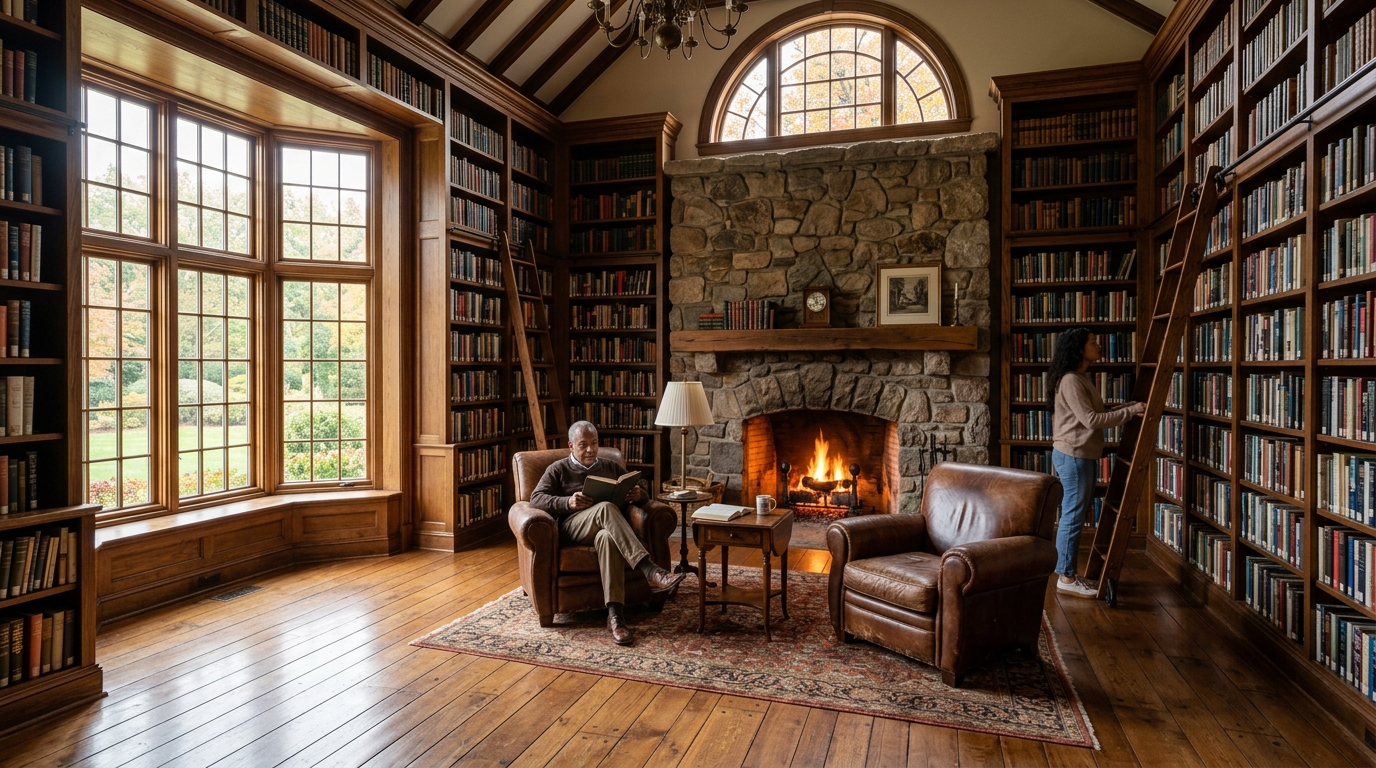
The North Shore property landscape is defined by its history and its unique geography. For a buyer, navigating this market requires more than just a list of recent sales: it requires an understanding of what makes a property truly exceptional over the long term. We sat down with a group of industry veterans to discuss the elements of a home that ensure it remains a premier asset for generations. These professionals argue that while trends in interior design may come and go, the fundamental architectural integrity of a home is what ultimately dictates its value and its legacy.
Focus on the Structural Envelope
Marcus Thorne, a local architect with decades of experience, highlights the importance of what he calls the good bones of a house. He argues that many modern renovations actually strip value by ignoring the original logic of the structure. When you walk into a home, you should feel a sense of balance, Thorne says. This comes from the mathematical relationship between ceiling heights, window placements, and corridor widths. These are things a buyer might not consciously notice, but they are the reason one house feels like a sanctuary while another feels like a box. He advises buyers to look at the roofline and the foundation first. A complex or poorly planned roofline can lead to significant maintenance challenges over time, while a simple, elegant design often points to a superior build quality that has already stood the test of time.
Thorne also points out that the North Shore has a specific climate profile. A home that was designed to catch the cross breezes from the water can significantly reduce the need for mechanical cooling during the summer months. This is a classic example of how traditional design is often more efficient than modern alternatives. He encourages buyers to visit a potential home at different times of the day to observe how the light moves through the rooms. A house that feels dark and oppressive at noon will likely be a difficult place to live, regardless of how many skylights are added later. The orientation of the building on the lot is one of the few things a homeowner can never change, so it should be a top priority during the search process.
The Premium of Scarcity and Authenticity
Elena Rodriguez, a specialist property appraiser, focuses on the data behind the aesthetics. She notes that in the North Shore, the most resilient properties are those that represent the best of their specific architectural era. A historic home that has been stripped of its leaded glass and original wood features is often worth less than one that has been carefully restored, she explains. The data suggests that buyers in this region are looking for authenticity. They want a connection to the past, but with the convenience of modern mechanical systems. Rodriguez suggests that the smartest investment is often the middle ground property: a home with its architectural soul intact but with updated plumbing, electrical, and climate control systems.
Rodriguez further explains that the market for homes with true architectural character is often more insulated from economic fluctuations. Collectors of architecture, much like collectors of fine art, are always looking for the best examples of a specific style. If you own a home designed by a notable architect or one that perfectly captures a historic period, your buyer pool is expanded. These buyers are willing to pay a premium for a home that has been preserved rather than modernized in a way that erases its history. She notes that the cost of replicating the craftsmanship found in older North Shore homes, such as hand-carved mantels or solid masonry, would be astronomical today. Therefore, buying a home that already possesses these features is a significant value play.
Integration with the Natural Landscape
Landscape architect Julian Vance brings the focus outward. In our conversation, he stressed that the North Shore is unique because of its varied topography. A buyer should never look at a house in isolation, Vance warns. The property value is inextricably linked to how the house sits on the land. He points out that mature landscaping can add up to twenty percent to a property value. This is not just about curb appeal: it is about privacy, wind mitigation, and soil stability. He recommends that buyers look for properties with established hardwoods like oaks and maples, as these take decades to grow and provide a sense of permanence that a new build simply cannot match.
Vance also touches on the concept of the outdoor room. In the North Shore, where lot sizes are often generous, the transition between the interior and the exterior is crucial. He looks for properties where the indoor living spaces open directly onto patios or gardens that feel like an extension of the home. This seamless transition increases the usable square footage of the property without the need for a construction crew. He suggests that buyers look for stone walls and pathways that show signs of age and stability. These elements provide a framework for a garden that can evolve over time while maintaining a sense of structure and order. By prioritizing architectural integrity and natural harmony, buyers can secure an investment that will appreciate not just in monetary value, but in its contribution to the neighborhood fabric.