The allure of the North Shore often culminates at the water edge. For many prospective buyers, a home overlooking the Sound or a quiet bay represents the pinnacle of local real estate achievement. However, the financial reality of waterfront ownership extends far beyond the interior square footage or the aesthetic appeal of the residence. A sophisticated buyer must evaluate a shoreline property through the lens of coastal engineering and legal entitlements. In our region, the value of a waterfront lot is inextricably linked to the health of its infrastructure and the clarity of its water access rights.
Understanding Riparian Rights and Legal Entitlements is the first step in any waterfront acquisition. These rights refer to the legal permissions granted to a property owner whose land borders a body of water. On the North Shore, these rights are not always uniform. Some deeds include specific language regarding the ownership of the underwater land, known as a lateral grant, while others only provide the right to access the water. For a buyer interested in installing a private dock or a mooring, confirming these rights is paramount. Without a clear chain of title regarding riparian access, the ability to build maritime structures can be legally challenged by neighbors or local municipalities. This legal clarity directly impacts the resale value, as a property with a pre-approved dock permit or a documented right to build carries a significant premium over landlocked parcels or those with ambiguous water access.
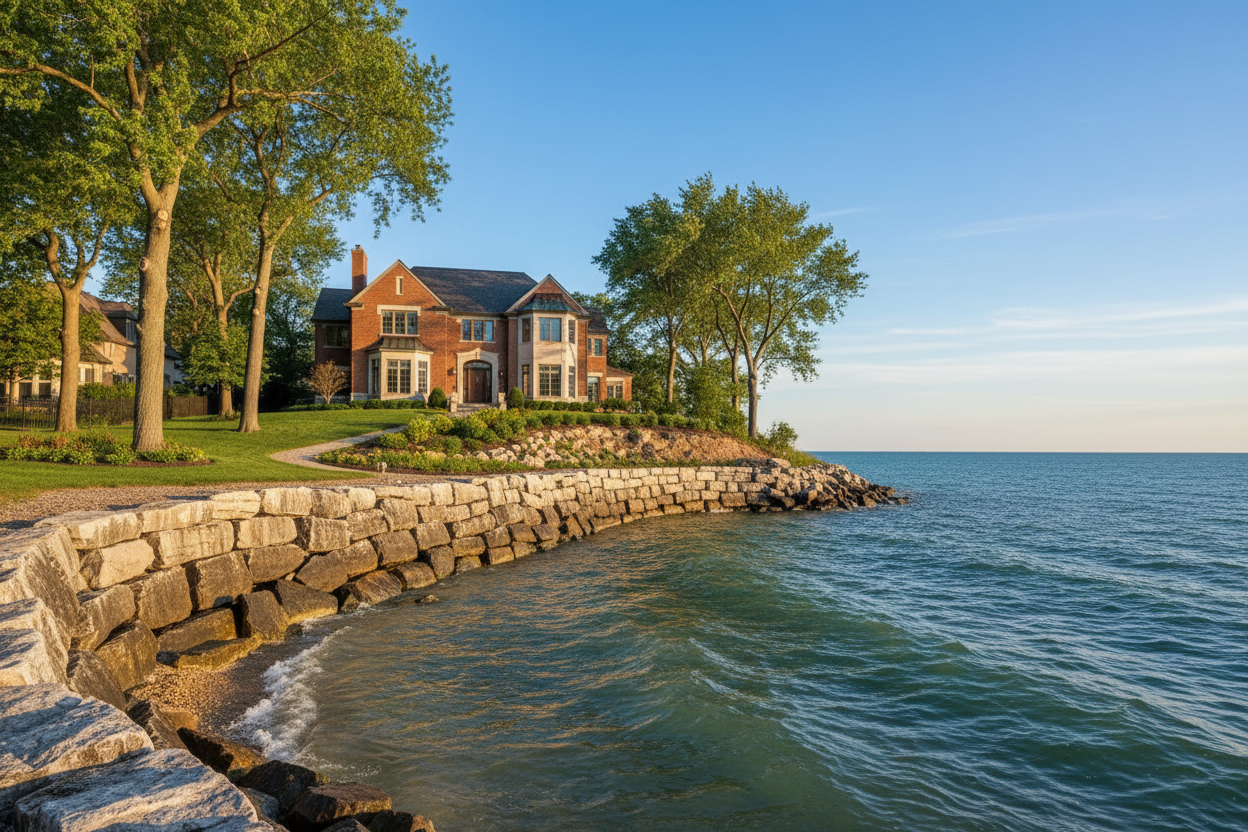
The second pillar of waterfront value is the structural integrity of coastal defenses. Bulkheads, seawalls, and revetments serve as the primary line of defense against erosion and tidal surges. When touring a property, buyers should look past the view and examine the condition of these structures. A failing bulkhead is not merely a cosmetic issue: it is a massive capital liability. Replacing a timber or steel bulkhead can cost thousands of dollars per linear foot. Buyers must investigate the materials used in existing structures. While older timber walls were common in previous decades, modern vinyl or composite materials offer significantly longer lifespans and better resistance to marine borers. A stone revetment, consisting of large boulders placed strategically to absorb wave energy, often requires less maintenance than a vertical wall but may take up more usable beach area. Evaluating the age and material of these structures is essential for projecting future ownership costs.
Environmental Regulations and Buffer Zones represent a significant hurdle for property development near the shore. Local and state agencies maintain strict oversight of what can be built within a certain distance of the high-water mark. These buffer zones are designed to protect coastal ecosystems, but they also limit a homeowner ability to expand a footprint or add amenities like swimming pools or guest houses. An authoritative buyer will request a recent survey that clearly marks the coastal erosion hazard line and any regulated wetlands. Understanding these boundaries is critical because they dictate the long term utility of the land. A lot that appears large may actually have very little buildable area once the required setbacks are applied. This data-driven approach to land use ensures that a buyer does not pay a premium for acreage that cannot be fully utilized.
Furthermore, the logistics of drainage and elevation are often overlooked in the excitement of a purchase. Waterfront properties are subject to unique hydrostatic pressures. Proper drainage systems that move rainwater away from the bluff or the seawall are vital to preventing sinkholes and soil saturation. Buyers should inquire about the presence of weep holes in seawalls and the grading of the lawn toward the street or a dedicated dry well. If water pools near the coastal structure, it can lead to catastrophic failure during a heavy storm. High elevation may provide a spectacular view, but it also necessitates a stable bluff. Assessing the vegetation on a hillside is a simple way to gauge stability: mature trees and deep-rooted shrubs generally indicate a stable slope, while bare patches of earth or leaning trees suggest active erosion.
Finally, the insurance landscape for coastal properties requires careful navigation. Standard homeowners policies typically exclude damage caused by rising tides or floods. On the North Shore, the cost of supplemental flood insurance is determined by the elevation of the first floor relative to the base flood elevation established by regional maps. A buyer should always request an elevation certificate before making an offer. This document provides the data needed to accurately quote insurance premiums, which can vary by thousands of dollars annually based on a few feet of elevation. By treating the waterfront property as a complex piece of maritime infrastructure rather than just a home, a buyer can protect their investment and ensure that the serenity of the shore is matched by financial security.