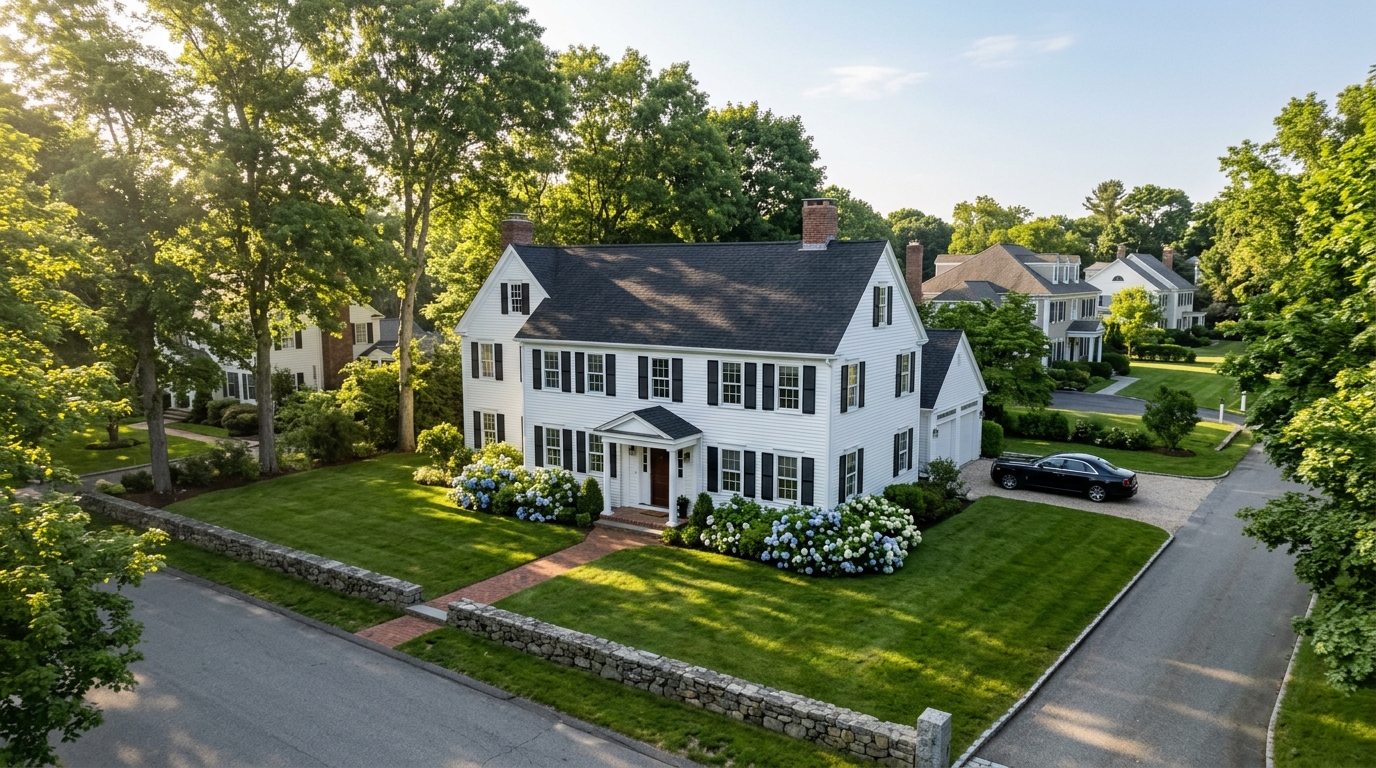
Understanding the North Shore property landscape requires a departure from broad regional averages. While a general report might suggest a certain percentage of growth for the state, the reality on the ground is often a collection of hyper-local shifts. These micro-markets are defined by a variety of factors: elevation, historical significance, and the proximity to salt water. For the discerning resident or investor, these variables are the primary drivers of long-term equity. Analyzing the data through a micro-market lens allows for a more sophisticated understanding of risk and reward.
The most prominent factor in our local market is the shoreline premium. Proximity to the coast does not merely add a flat percentage to a home value: it changes the entire valuation model. In coastal micro-markets, the price per square foot often behaves differently than in inland neighborhoods. While inland homes are frequently valued based on their interior finishes and recent renovations, shoreline properties derive a significant portion of their value from the land itself and the view corridor it provides. This creates a fascinating data point: the appreciation of shoreline land often outpaces the appreciation of the structures built upon it. Investors who prioritize lot quality over building condition in these areas frequently see more robust long-term gains because the supply of coastal land is finite.
Another critical element in our analysis is the village center effect. In many North Shore communities, there is a distinct premium for properties located within a specific radius of the town center. This is often driven by the desire for walkability and immediate access to local commerce. Data suggests that homes within a half-mile of a vibrant village hub maintain their value more consistently during periods of market correction. This resilience is due to the inherent utility of the location. While a secluded estate offers privacy, a village-adjacent home offers a lifestyle of convenience that remains in high demand across different demographic shifts. When examining absorption rates, village-adjacent properties often spend fewer days on the market compared to their more isolated counterparts, regardless of the broader economic climate.
Inventory levels also play a pivotal role in shaping the micro-market. In the North Shore region, inventory is often restricted by conservation land and historical preservation mandates. These restrictions act as a natural ceiling on supply, which supports higher price floors. When analyzing the ratio of active listings to sold properties, we see a trend of low inventory in established historic districts. This scarcity is a fundamental driver of value. A low inventory environment ensures that even when demand fluctuates, the lack of supply prevents significant price erosion. For buyers, this means that entering an established historic district often requires a higher initial investment, but it also offers a more stable equity outlook over a decade-long holding period.
The quality of local infrastructure and public amenities also influences the data. High-performing school districts, well-maintained parks, and accessible public transportation hubs create a baseline of demand that is decoupled from luxury trends. These factors provide a safety net for property values. When we look at the correlation between municipal investment and property appreciation, the connection is clear: towns that reinvest in their public spaces see a corresponding rise in residential property values. This is why it is essential to look at the municipal budget and long-term planning documents when assessing a neighborhood. The health of the town is a leading indicator of the health of its real estate market.
Finally, we must consider the impact of architectural integrity on market value. In a region known for its heritage, homes that have been meticulously preserved or thoughtfully restored to reflect their original character often command a higher price than those with generic modern updates. Authenticity is a measurable asset in the North Shore market. Appraisers often find that historical details, when paired with modern mechanical systems, create a unique value proposition that is difficult to replicate. This creates a specialized micro-market for heritage homes where the buyers are less sensitive to interest rate changes and more focused on the rarity of the asset. By synthesizing these various data points: shoreline proximity, village access, inventory constraints, and architectural value: we can gain a comprehensive view of the market that goes far beyond simple price-per-square-foot calculations.