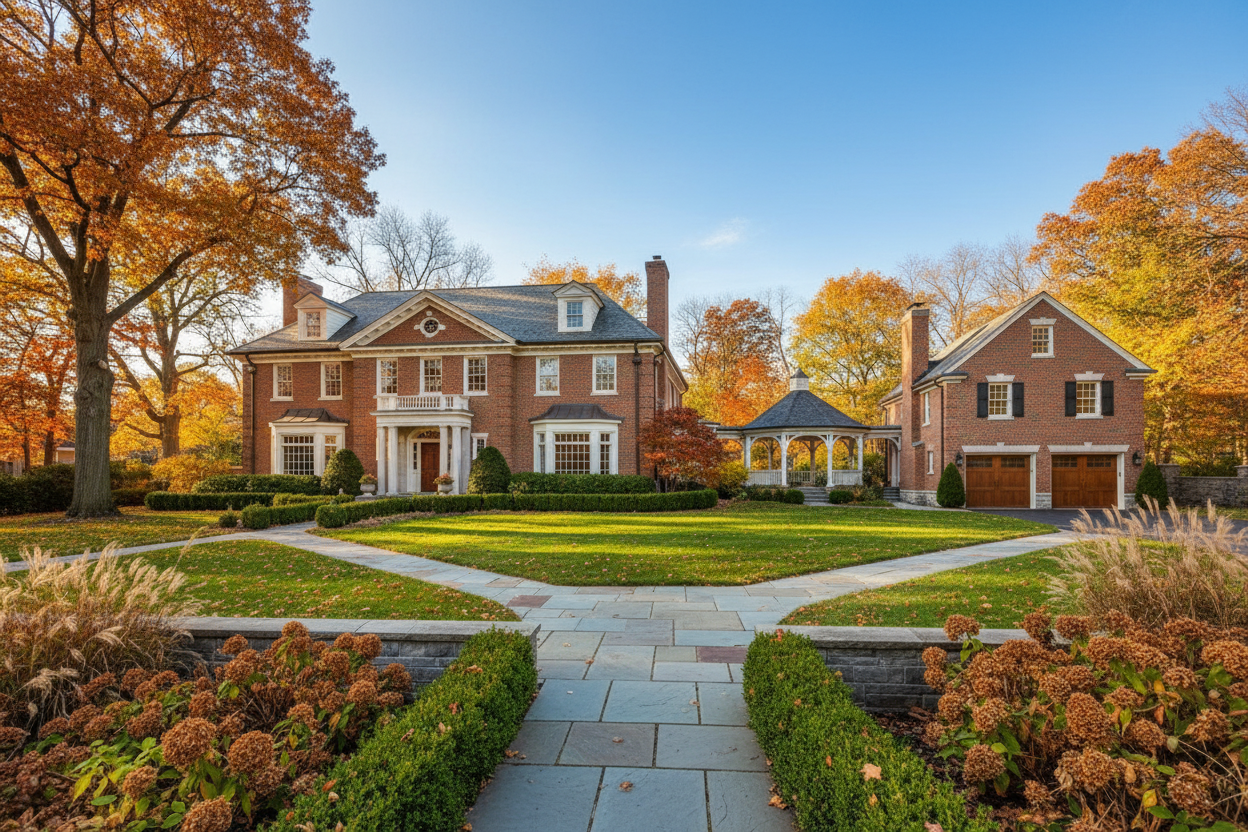
The North Shore real estate landscape is witnessing a fundamental shift in how high-net-worth families approach property acquisition and long-term asset management. Historically, the market was defined by the singular prestige of the primary residence. However, contemporary market data suggests a growing appetite for what analysts now categorize as the Legacy Compound: a multi-structure estate designed to accommodate several generations under a unified land title. This trend is not merely a lifestyle choice: it represents a strategic move toward asset consolidation and emotional hedging in an increasingly volatile global economy.
When we examine the inventory of the North Shore, properties that offer multiple legal dwellings often command a disproportionate premium compared to their single-structure counterparts. This premium is driven by the scarcity of flexible zoning and the high cost of new infrastructure development. A property that possesses a secondary guest house or a detached studio is no longer viewed as a luxury convenience: it is seen as a versatile financial instrument. These structures provide options for multi-generational living, professional home offices, or long-term guest quarters, all of which enhance the liquidity of the asset should it ever return to the open market.
One of the primary drivers of this market segment is the complexity of local zoning ordinances. In many premier North Shore neighborhoods, the ability to add a second structure is heavily restricted by lot coverage ratios, setback requirements, and utility capacity. Consequently, properties that already feature grandfathered secondary residences carry a significant intrinsic value that is difficult to replicate. For the discerning buyer, purchasing an existing compound is often more cost-effective than attempting to navigate the multi-year permitting process required to build a similar footprint from scratch. This barrier to entry creates a natural floor for the valuation of these estates.
The economic logic of the multi-generational estate also extends to the concept of the family office. As more families move their primary business operations into private environments, the demand for sophisticated, detached workspaces has surged. A dedicated structure for professional use allows for a psychological and physical separation of concerns, which is a critical factor for productivity in high-stakes environments. Market reports indicate that estates with professional-grade auxiliary buildings sell faster than those without, as they cater to the specific needs of modern entrepreneurs and executives who prioritize privacy and security.
From a data-driven perspective, the maintenance and operational costs of a multi-structure estate must be weighed against the benefits of consolidation. While the overhead for multiple roofs, HVAC systems, and utility lines is higher, the centralization of land taxes and landscaping services provides a unique economy of scale. Instead of maintaining three separate properties across different regions, a family can concentrate their capital into a single, high-performing asset. This strategy reduces the logistical friction of travel and property management while ensuring that the family's wealth remains rooted in a tangible, appreciating landmass.
Furthermore, the social utility of these compounds cannot be overstated. In an era where privacy is the ultimate luxury, the ability to host family and peers in a secure, private setting is a significant market differentiator. The legacy compound functions as a private sanctuary, providing a level of control over one's environment that is unattainable in high-density luxury developments. This control extends to security protocols, aesthetic consistency, and the preservation of natural surroundings, all of which contribute to the long-term desirability of the North Shore area.
As we look toward the future of the neighborhood, the multi-structure estate is likely to remain a defensive asset class. Its value is rooted in the permanence of the land and the unique permissions associated with the structures built upon it. For those looking to preserve wealth across generations, the investment in a multi-generational compound offers a rare combination of utility, prestige, and financial resilience. It is a testament to the enduring appeal of the North Shore that these estates continue to set new benchmarks for value, reflecting a sophisticated understanding of what it means to build a lasting family legacy through real estate.